
Greenwood Previous Residents by Era
The most useful source depends on the date being tested. Greenwood previous residents from the late twentieth century may appear in local or regional directories, while an early ownership trail may require deed books, probate indexes, and maps. Modern GIS and permit layers help anchor the current address, but they cannot by themselves prove who occupied a house. The table separates ownership, household, estate, and physical-place evidence.
| Source | Years It Covers | Where Held | What It Shows |
|---|---|---|---|
| Deed indexes and deeds | Indexes 1825-1865, 1865-1888, 1879-1900; deeds 1825-1900 | Indiana State Library microfilm; Johnson County Recorder | Transfer parties, instrument dates, and legal descriptions |
| Probate records | Wills 1827-1907; order books 1831-1852; indexes 1853-1900 | State Library microfilm inventory and county custody | Estate, guardian, and transfer clues |
| Greenwood directories | 1965, 1967, 1971-1972, 1974 | Indiana State Library | Dated name and address snapshots |
| Haines regional directory | 1988-2013 | Indiana State Library | A later bridge for Greenwood households |
| Maps and permits | Sanborn years 1902, 1910, 1920, 1930; current municipal layers | State Library and Greenwood Document Center | Physical changes, location, and dated work |
Start near the known date, then move one source at a time. A directory hit should be compared with the nearest available deed, map, or census year. An owner may live elsewhere, and an occupant may not own the parcel. That distinction is central when identifying past residents.
Fix the Greenwood Address First
Before searching names, standardize the address with USPS ZIP Code Lookup and compare it with Greenwood's public address and parcel layers. Record the unit, street suffix, postal city, ZIP, township, section, range, and parcel ID when shown. These details prevent two similar addresses from being merged.
Old records may use a former street name, a different suffix, or a legal description instead of today's number. No official year for a citywide Greenwood renumbering was found. Do not invent one. Test directories, plats, maps, ordinances, and parcel descriptions. Also remember that annexations changed the city footprint. A postal Greenwood address is not proof that the parcel was inside Greenwood on the date under study.
Note: Keep the address exactly as each source prints it, even when a modern standardized version looks cleaner.
Greenwood Deed Search Channels
The Johnson County Recorder is the county custodian for recorded instruments. Begin with the Recorder document center for official forms and notices. The public Fidlar Tapestry search is another route, but the reviewed screen did not render Johnson County coverage dates or rates. Search parcel, grantor, and grantee separately rather than assuming one query sees the full chain.
The Tapestry screen below shows the starting point, not a complete Greenwood result. Its source page should be checked again when the search is run because access terms can change.
Open the Fidlar Tapestry deed search used for Greenwood address research.

The county and instrument controls shown here support a deed trail, but each displayed party must remain tied to the specific instrument and date.
Trace Greenwood Owners Backward
A chain of title is the sequence of recorded transfers for the same property. Begin with the current assessor card, then use the buyer on one deed to locate an earlier purchase. Names alone are not enough. Compare the parcel, subdivision, lot, and full legal description at each handoff because splits and combinations can break an apparent chain.
- Find the current parcel and copy the displayed owner spelling, alternate ID, tax description, and legal description.
- Locate that owner's purchase instrument in the recorder index. Save its date, instrument type, parties, and parcel references.
- Search the seller as a grantee to find when that person or entity acquired the same property.
- Repeat the link backward. Stop and investigate whenever the lot, acreage, plat, or legal description changes.
- For early years, move from the online route to the State Library microfilm inventory or county deed books.
- Grantor / grantee
- The grantor gives or sells an interest. The grantee receives it.
- Chain of title
- The linked sequence of recorded ownership transfers for one property.
- Legal description
- The formal land description in a deed. It is often more stable than a street number.
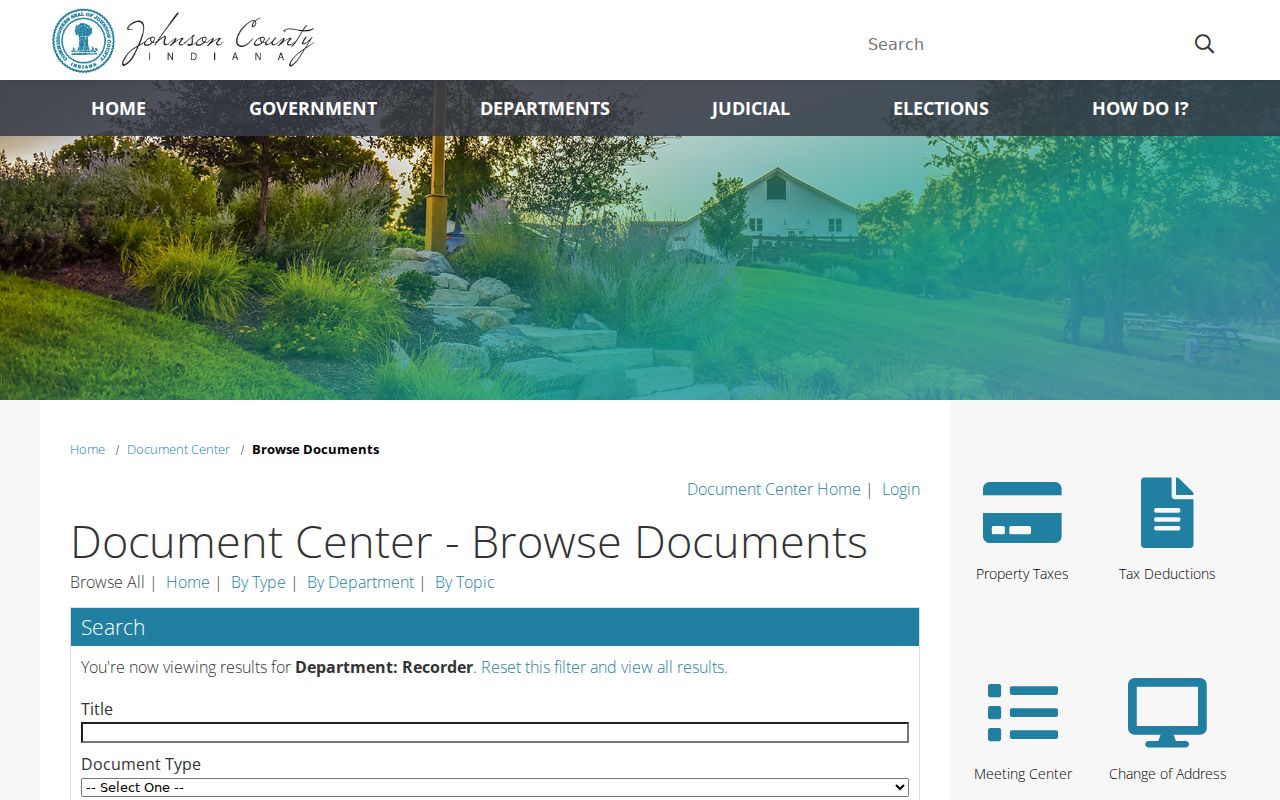
The document list supplies official county context for requests and recording services when an online name search does not settle the chain.
Maps Date Greenwood House Changes
Maps help answer whether the same words referred to the same place. The State Library catalog lists Greenwood Sanborn maps for 1902, 1910, 1920, and 1930, plus catalog entries spanning 1930-1940. Sanborn sheets can show a building footprint and use at a date, while county atlases and plat books track lots and subdivisions. The Johnson County map collection also identifies Greenwood maps from 1967 and 1974.
The Greenwood annexation StoryMap places growth from 1973 through 2025 in context. Its own warning says older map geometry may not be exact. For a firm boundary claim, use the linked ordinance and recorded legal description. This guards against treating today's Greenwood outline as if it always applied.
Physical evidence should be logged apart from people evidence. A Sanborn sheet may show a footprint, construction material, street label, or building use, yet it does not prove the identity of an occupant. A plat can establish a lot number and subdivision name without showing when a household arrived. Compare the map date with the closest directory, deed, tax entry, newspaper notice, and permit report. Where the printed address and legal description disagree, preserve both forms and explain the mismatch instead of silently choosing the modern one.
Greenwood House History Help
No formal Greenwood-only house-history guide was located. The best documented local route joins the Johnson County Museum's genealogy collection and research service with the State Library's property guide. The museum holds original county material, early tax indexes, estate inventories, yearbooks, and local-history programs, including “A House is a Home.” Its research service can connect a house, family, school, and place when an online index ends.
Review the Indiana State Library property research guide used for previous residents work.
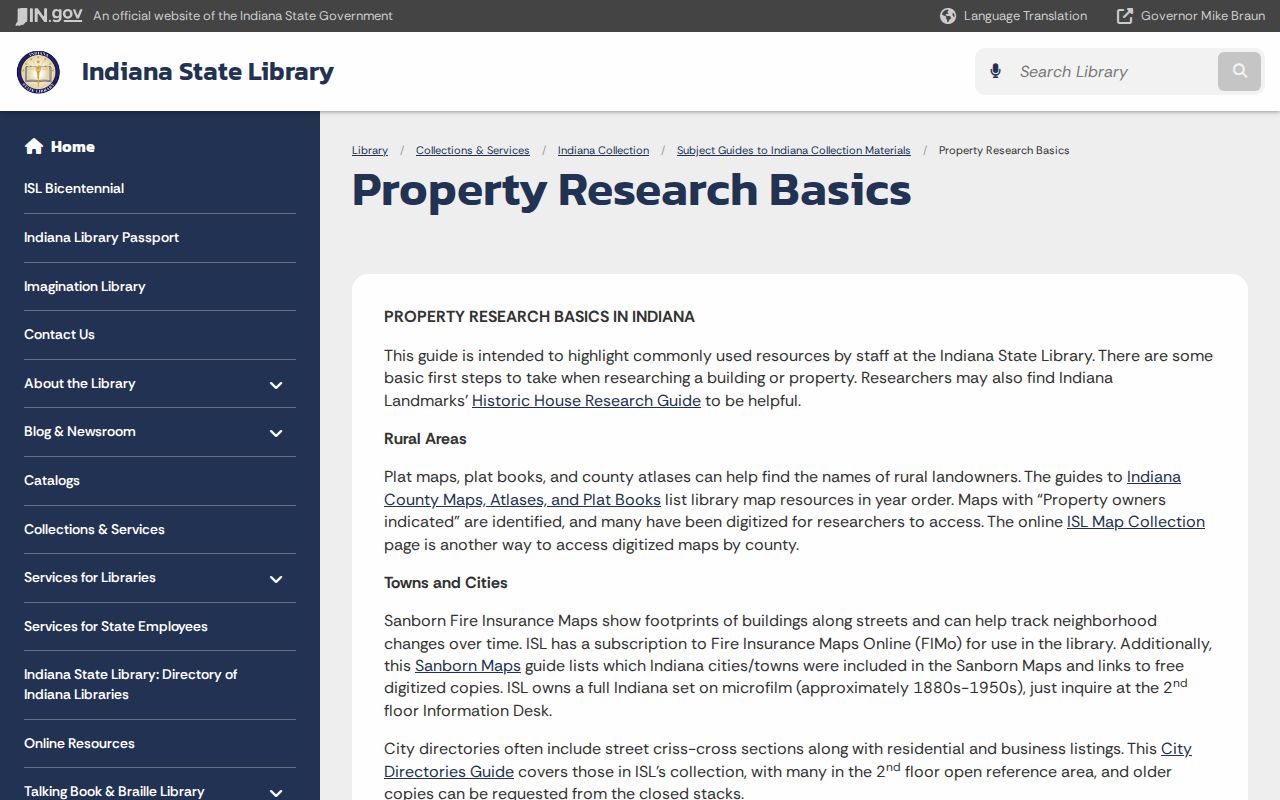
The guide brings together criss-cross directories, maps, Sanborn sheets, newspapers, and permit notices, which fill the gaps between ownership records.
Note: Ask a library or museum about copying rules and exact call numbers before planning an in-person research session.
Greenwood Records Survived Unevenly
The 1874 Johnson County courthouse fire is a real break in record continuity. A county guide or later index may identify a series even when original papers were lost, rearranged, or preserved only in another form. For Greenwood previous residents in the nineteenth century, an empty search result is therefore a gap, not proof that no transfer or household existed.
Use surviving deed indexes, probate volumes, maps, tax material, newspapers, and family collections together. Cite the format actually seen. A microfilm index points toward a record; it is not the same as reading the deed image or a certified copy. This careful label matters most where the fire created uncertainty.
Probate offers several dated bridges across that uncertainty. The documented county runs include wills from 1827 through 1907, order books from 1831 through 1852, and probate indexes from 1853 through 1900. An estate file may explain a transfer that does not look like an ordinary sale. Guardian material can also connect heirs to land. Treat those names as estate roles until another dated source ties them to the address itself.
Greenwood Previous Residents as Households
Owners are only one part of a home's past. Greenwood directories can show a dated occupant, spouse notation, occupation, telephone, and residence marker. The documented local years include 1965, 1967, 1971-1972, and 1974, followed by the Haines South Central Indiana run for 1988-2013. Telephone directories add several later slices. Full collection details belong in the Greenwood city directory account.
Build the household trail as a sequence: check the nearest directory year, compare the next public federal census schedule, then test newspapers, obituaries, yearbooks, probate, and cemetery material. Census schedules follow a 72-year release rule, so they are historical evidence, not a current roll. An obituary can extend a person's story after departure, but verify the newspaper title, page, and date.
- Write the directory's exact address, year, name, and notation.
- Match the nearest available census by household and location, allowing for spelling differences.
- Compare the deed owner and directory occupant as separate roles.
- Add an obituary, probate file, or yearbook only when its date and identity fit.
Lawful use. Research Greenwood previous residents for house history, genealogy, heirs, or personal curiosity. Never use a record to track, threaten, or harass a living person.
Keep an evidence log with the printed address, date, source and page, person or organization, role, parcel or legal description, change type, and confidence note. That record makes unresolved conflicts visible instead of forcing a false conclusion about who lived here before.